What Is A Fabric Ribbon Printer?
A fabric ribbon printer is a specialized printing device used to print text, logos, barcodes, or designs directly onto fabric-based ribbons such as satin, nylon, polyester, or cotton.
Most fabric ribbon printers use thermal transfer printing, a process where heat transfers ink from a ribbon (ink film) onto the fabric surface, which enables the print on satin, fabric, nylon, or cotton to be water-resistant, anti-scratch, and highly durable.
Why Small Businesses Need It
It depends on your business’s category or what business you manage; fabric ribbon printing machines are chiefly and widely used for fulfilling branding, packaging, and labeling purposes.
Below are the most common practices of use of fabric ribbon printers:
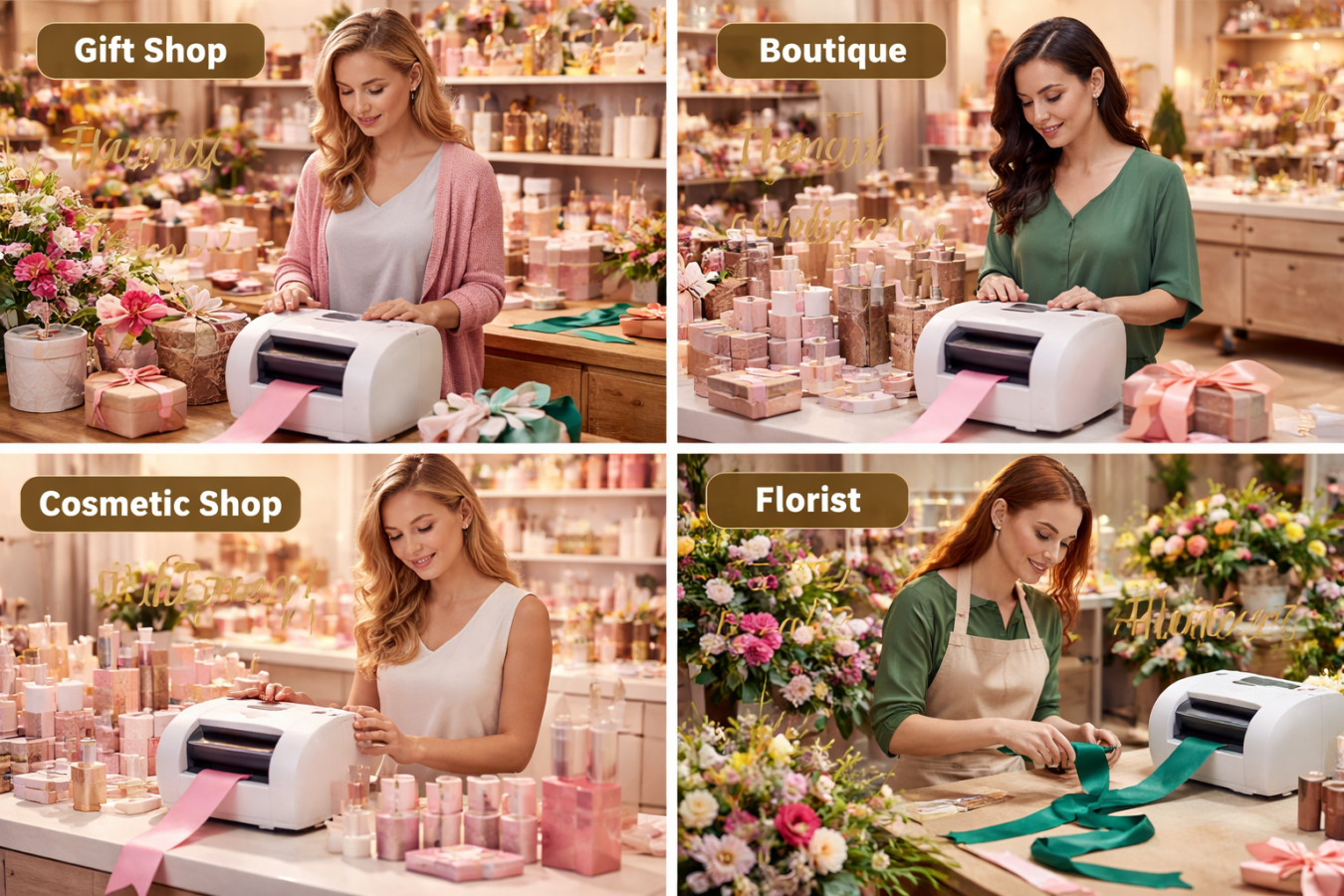
- Gift shops, which demand a large amount of custom ribbons for packing or adorning gifts, especially during gift peak shopping periods, such as Valentine’s Day, Christmas, etc. To avoid any inconvenience and heighten the customer satisfaction rate, it’s essential to buy a customizable fabric ribbon printing machine to cater to the gift shopping seasons.
- Clothing Brands & Apparel Manufacturers: As the largest user groups, they buy fabric ribbon printer machines to print washing care labels, size labels or material labels. In most countries (USA, EU, UK, etc.), it is illegal to sell a garment without specific labeling. How will a shopper take a piece of T-shirt to the counter to check out without having seen the care or material labels?
- Event companies: the need is driven by a different set of priorities: personalization, aesthetics, and on-demand branding. They need fabric ribbon printers to create high-quality, customized decorative elements on-site, transforming generic supplies into cohesive branding tools that elevate the guest experience and create profitable upselling opportunities. Generally speaking, event companies favor printers that can print wider fabric or satin ribbons.
- Florist & wedding agencies: Florists and wedding agencies need fabric, satin, and silk ribbon printers to meet the modern demand for hyper-personalization and on-demand service. While pre-printed ribbons can take weeks to order and require large minimum quantities, an in-house printer allows you to create custom ribbons in minutes, elevating your brand and creating new revenue streams. Fabric satin or silk ribbon plays a crucial role for them. That lovely smile on the recipient’s face speaks volumes after he sees the decorative ribbon reads, “Happy birthday!” “I love you forever!” and the like.
- Fabric ribbon printer machines are also used for packing skin care products, wrapping perfume boxes, boutique beauty shops, and more.
How to Choose a Fabric Ribbon Printer for Small Businesses?
When choosing a fabric ribbon printer for a small business, the key is not just the price—it’s about print durability, material compatibility, production efficiency, and long-term cost. What matters most here is choosing a printer for fabric ribbon that suits your business best.
As we already know that most fabric ribbons, satins, or silk ribbons are printed by thermal transfer printers, which ensure the prints are durable, we will just not dive in to learn the printing technology further.
Bear in mind of these key factors when choosing a fabric ribbon printer for your small business:
Compatibility with Fabric Materials: Not all printers handle every ribbon type. The most common four types of fabric materials for printers are satin ribbon (ideal for gift packaging), nylon (ideal for garment labels), polyester (ideal for apparel labeling), and cotton (widely used on eco products). Make sure you confirm with the fabric ribbon printer manufacturer if the ribbon type it provides suits your business needs.
Print resolution, which is reflected by DPI, the abbreviation of Dot Per Inch, is largely manifested with these numbers:
- 203 DPI, for basic text, barcodes
- 300 DPI → logos, small fonts, detailed branding
The greater the number appears preceding DPI, the clearer it will be visually.
Print Speed & Production Volume: Like many machines, fabric ribbon printers also come in low volume, medium volume, and high volume to cater to businesses varying from small to large scales. For small businesses, buying a small fabric ribbon printer is the best choice. Likewise, choose the narrow ribbon printer for your small business over the medium or wide fabric ribbon printers.
Ribbon & Consumable Costs: This is often overlooked but critical. Since operating a fabric ribbon printer in the long run requires changing the ribbon with significant frequency, it implies an inevitable immense cost for the long-term operation.
Among the three types of thermal ribbons:
- Wax → cheap, less durable
- Wax-resin → balanced
- Resin → most durable (best for fabric)
I’d recommend resin ribbons for fabric because they offer high resistance and longevity.
Ease of Use & Software Compatibility: Look for the fabric ribbon printer that comes with software that is compatible with Windows/Mac, a user-friendly design interface, and high customizability with very few or no limitations.
Automation Features: As a precaution for the buying gift peak season or to elevate the operational efficiency for your business, buy a printer for fabric ribbon designed with an automatic cutter, continuous feeding, and batch printing. This will save time and reduce manual errors.
Budget vs. Business Stage: If you manage a small business or just want to start one, an entry-level low-volume fabric ribbon printer, usually costing between $30 and $150, will be best.
If you want to grow your small apparel, florist, or gift business, purchasing a fabric ribbon printing machine with mid-range volume and price ($150–$600) will be optimal.
As for the industrial-level fabric ribbon printer machines, they are not made for small businesses.
Conclusion:
In short, when buying a fabric ribbon printer, focus on:
- 1. Printing technology (thermal transfer)
- 2. Fabric compatibility
- 3. Resolution (300 DPI for branding)
- 4. Production capacity (speed + automation)
- 5. Long-term consumable cost