Why the Right Wristband Printer for Hospitals Matters
Accurate patient identification is essential to hospital operations and inpatient safety. It is crucial to place a wristband on every inpatient’s wrist to prevent identification errors that could put lives at risk. Without a wristband, tragic mistakes may occur—such as administering medication to the wrong patient, transfusing blood unnecessarily, or even performing surgery on the wrong individual. Few scenarios in healthcare are more horrifying than these preventable errors.
With reliable wristband printer machines installed in hospitals, the risk of such disasters can be greatly reduced from the very beginning of patient admission.
What is a Wristband Printer Machine for Patient Identification?
A wristband printing machine is a professional device designed to print wristbands that are worn on the wrist for identification purposes. Among its wide range of applications, the wristband printer machine is most commonly used to produce patient wristbands and event wristbands.
Wristband Printing Machines Are Generally Divided into Two Main Categories:
Thermal Wristband Printer
A thermal wristband printer works by heating a heat-sensitive (thermochromic) coating on the wristband material, causing it to darken and form text, barcodes, or graphics.
Pros:
No ink, toner, or ribbons required
Low maintenance cost
Cons:
Prints may fade over time if exposed to water, heat, light, or chemicals
Less durable for long-term wristband use
Thermal Transfer Wristband Printer
A thermal transfer wristband printer uses heat to melt wax- or resin-based ink from a ribbon onto the wristband material.
Pros:
Higher resolution output
Highly durable, water- and chemical-resistant prints
Ideal for long-term wristband wear
Cons:
Requires ribbon cartridges, increasing consumable costs
What Do You See on a Wristband for Hospital Patients?
A hospital wristband typically displays a patient’s personal information, including name, date of birth (DOF), ward, and bed number if hospitalized. Many wristbands also feature a barcode or QR code, allowing medical staff to scan the wristband for quick and accurate identity confirmation.
What Key Factors to Consider When Selecting a Hospital Wristband Printer?
After understanding the pros and cons of both the direct thermal wristband printer and the thermal transfer wristband printer—and considering that most hospitals prefer the latter—the following key factors should be evaluated when selecting a thermal transfer hospital wristband maker.
Wristband Material Compatibility
Wristband printers for hospitals that use thermal transfer printing technology are compatible with the following wristband materials:
Paper wristbands
Paper wristbands are ultra-lightweight, low-cost, and smooth, making them suitable for 300 DPI or higher high-resolution printing. Since they are made of paper, they are perfect for short-term use, ideally for hospitalized patients staying under three days.
Synthesized paper wristbands
Synthesized paper wristbands are lightweight, waterproof, and scratch-resistant. With a smooth surface, these wristbands are suitable for short-term use as well, offering a longer lifespan than paper wristbands—up to seven days.
PVC wristbands
PVC wristbands are soft, durable, and chemical-resistant, making them ideal for patients who remain in the hospital for medium- or long-term stays.
Fabric-coated wristbands or PET wristbands
Fabric-coated wristbands and PET wristbands feature a soft texture and good breathability, making them especially suitable for pediatric and elderly care departments.
PE/PP wristbands
PE/PP wristbands offer exceptional durability and are commonly used in outdoor environments, emergency rescues, and disaster-response scenarios.
Print Quality and Resolution
Most wristband printers for hospitals are available in 200 DPI and 300 DPI resolutions. DPI, short for dots per inch, refers to the number of printed dots within one inch—the higher the DPI, the clearer the print quality.
In most situations, wristbands printed by a 200 DPI wristband printer are readable and scannable. However, if the price difference is reasonable, a 300 DPI hospital wristband maker is usually preferred for its superior clarity. The scanning accuracy of barcode wristband printers in hospitals is of critical importance.
Ease of Use for Medical Staff
Before purchasing hospital wristband printers, ensure they offer simple media loading, one-button operation, minimal training requirements, and time-saving performance in high-pressure environments such as the ER and ICU. These features greatly support medical staff during time-critical emergency situations.
Compliance and Safety Standard
Hospitals are constant battlefields against viruses and bacteria, making infection control essential. All medical equipment must meet strict hygiene standards. Therefore, wristband printer machines that are easy to clean should be a top priority. A wristband printer for hospitals with a smooth, sealed surface is particularly suitable for maintaining high hygiene levels.
Cost Considerations and Total Ownership Cost
When evaluating hospital wristband printer price, it is important to consider the total cost of ownership rather than the initial purchase alone. A single medical wristband printer will only function for a short time before wristbands and printing ribbons need replenishment.
Due to the frequent replacement of wristbands and ribbons, investing in relatively expensive medical wristband printers is often more cost-effective in the long run. High-quality wristband printers are more durable and can operate reliably for many years.
Additionally, sourcing a wristband printer manufacturer online allows hospitals to purchase original ribbons and wristbands at lower prices than those offered by regional agents or distributors. Over time, this approach can save a significant amount of money.
A higher-priced, high-quality hospital wristband printer is also less likely to malfunction during its first few years, reducing downtime and the need for frequent technical support or maintenance.
Tips for Choosing the Right Supplier
It is highly recommended to select a wristband printing machine manufacturer that offers customization options, technical support, OEM/ODM services, and global shipping services. In short, partnering with a B2B hospital wristband printer manufacturer helps build long-term trust and reliability.
For branded businesses, OEM/ODM services enable manufacturers to provide customized wristband printers that align with specific branding requirements.
Conclusion
Reviewing the factors above before adding a wristband printer to your shopping cart can significantly enhance patient safety and hospital efficiency. Choosing a wristband printer machine designed for long-term use is a wise decision, as hospitals are built to serve generation after generation.
If you are currently searching for a paper wristband printing machine for patients, consider the following option:
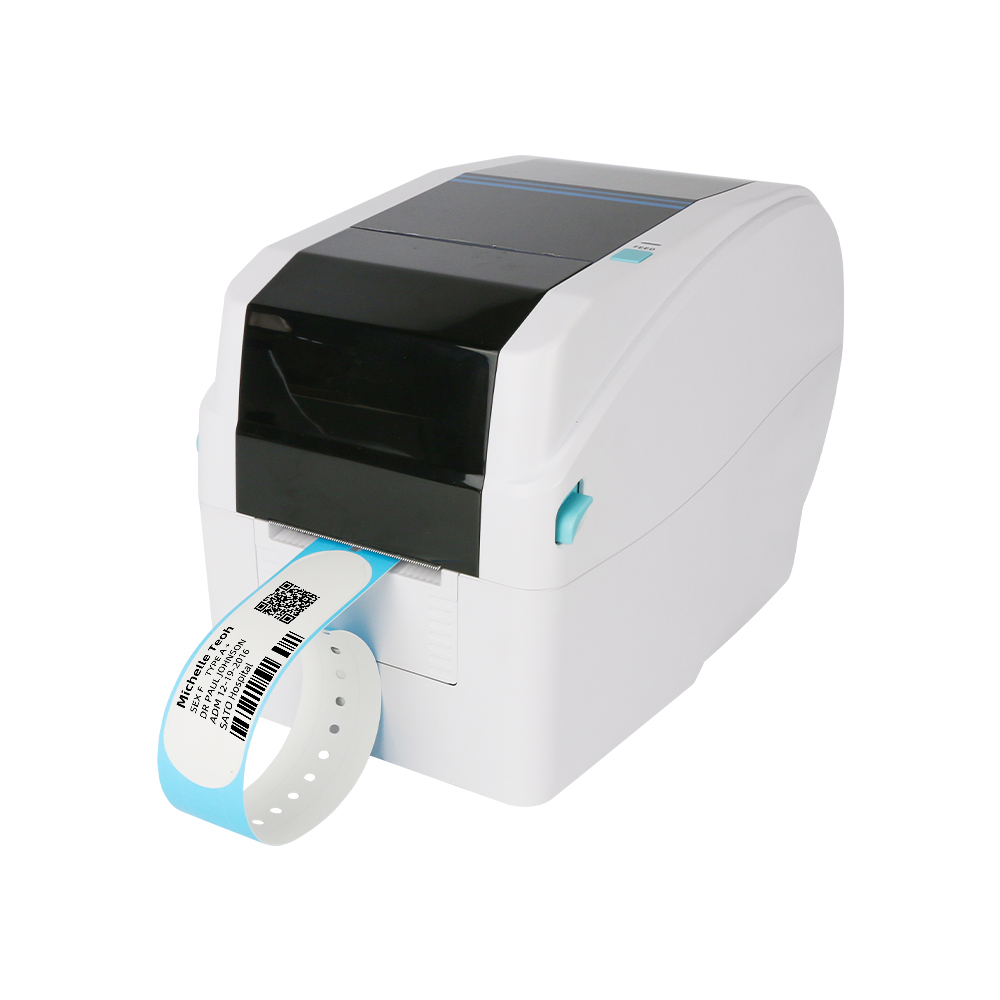
Paper Wristband Printing Machine Features:
Highly customizable to meet customers’ specific needs.
Supports both direct thermal and thermal transfer printing.
High-speed printing of up to 6 inches per second.
300 DPI high-resolution output.
Computer-controlled for easy operation, simple maintenance, and reliable performance.
Print head and rubber rollers designed to support up to 30 kilometers of printing