Why Digital Traffic Sign Printers Are Replacing Traditional Methods
It is inevitable that traditional methods of making traffic signs are being replaced by large industrial traffic sign printers, as these modern solutions offer clear advantages over conventional approaches.
Print Speed
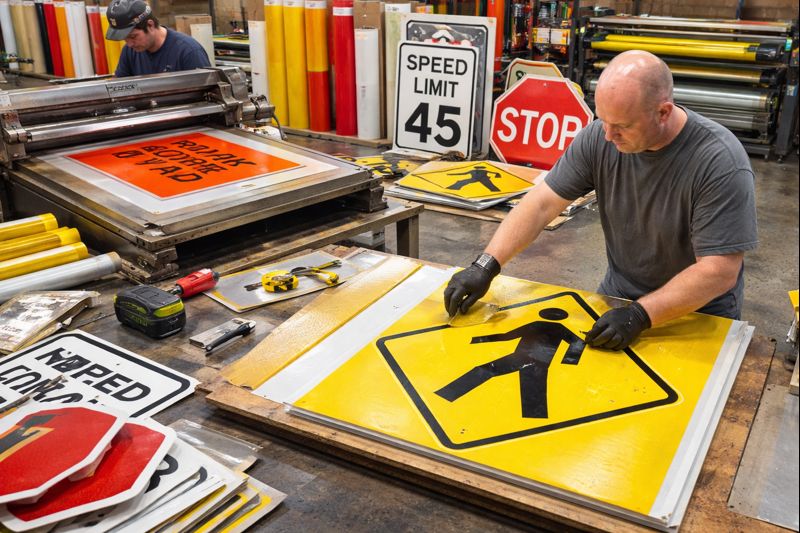
Printers for traffic signs launched in the last five years are generally 3–5 times faster than those that served the market for decades. For example, Masung’s MS-1590 Digital Traffic Sign Printer delivers a rapid output of 25 m²/hour, which is five times faster than manually made traffic signs. This makes it an optimal solution for road construction projects with critical deadlines.
Compliance
As there is no single international standard defining how road traffic signs should look, most road sign printing machine manufacturers follow the standards of developed regions, particularly North America and Western Europe. Traffic signs produced to these specifications are widely accepted worldwide, as many countries adopt these standards as benchmarks.
If your traffic signs differ from the “standard,” you can discuss customization or modification with the traffic sign printer supplier before placing the order, ensuring regulatory and regional compliance.
Cost Efficiency
Traditional methods of making traffic sign printers—such as screen printing, vinyl cutting, and outsourced fabrication—are significantly more costly than digital traffic sign printers. This comparison goes beyond a single factor and reflects improvements in materials, labor, time, inventory management, and reduced replacement cycles.
With the advancement of digitalization, traffic sign printers no longer require plates, films, or screens to print traffic signs.
Reduced material cost
Digital traffic sign printers use ink only where required, minimizing trial-and-error waste. In contrast, traditional methods for making traffic sign printers generate waste due to color misalignment, cutting errors, leftover vinyl, and test prints.
Massive labor saving
Traditional traffic sign production often requires multiple workers and extended time. Adopting the digital traffic sign printer eliminates manual screen setup, manual lamination, hand trimming, and mounting.
Faster production
In general, industrial traffic sign printers deliver 3–5 times higher output than traditional methods.
Reduced inventory & storage cost
Digital traffic sign printers support print-on-demand production, eliminating the need to store large volumes of finished signs and excess materials that may eventually go to waste.
Reduced replacement frequency
Digitally printed traffic signs use UV-resistant inks combined with weatherproof coatings and high-quality reflective materials. These features ensure a lifespan of many years, dramatically reducing traffic sign replacement work.
How Do Traffic Sign Printers Work?
A digital traffic sign printer is an industrial printing machine designed to produce durable, high-visibility road signs by printing graphics directly onto reflective materials or sign substrates. Unlike traditional screen printing or vinyl cutting, digital printing uses a computer-controlled, inkjet-based process that is faster, more precise, and more flexible.
Below is the typical workflow of a traffic sign printer
1. Digital Design Preparation
The process begins by customizing your design using software typically provided by the traffic sign printer manufacturer. You can design or modify traffic signs with specific symbols, colors, and sizes according to your requirements.
2. Material Preparation
Compared with traditional road sign production, the digital traffic sign printer requires significantly less material and labor. Reflective films and durable PVC substrates are often included in the initial purchase, extending the printing period before replenishment is required.
As a digital traffic sign printer manufacturer with years of experience, Masung is among the few traffic sign printer companies that include complimentary durable reflective OC film. This material guarantees long-term usability, enhances visibility in low-light or poor weather conditions, and supports both single-sided and double-sided printing. The material is loaded directly into the printer for seamless operation.
3. Printing Process
The newest generation of printers for traffic signs adopts thermal transfer printing, UV printing, or solvent-based ink printing. These technologies allow the printer to apply ink with high durability, UV resistance, and color vibrancy.
Many models also integrate cutting tools to produce precise shapes and borders. Although printers for traffic signs can be bulky—such as the MS-1590—they often feature one-click automated operation for consistent alignment, minimizing misprints and material waste. User-friendly editing software eliminates the need for pre-made templates, while an integrated cooling system ensures stable operation during continuous use of the traffic sign printer.
As the printing process concludes, integrated cutting and drying functions ensure the ink is fully cured and resistant to smudging, fading, and weathering. This streamlined workflow reduces both labor and finishing costs.
What Features to Look For When Choosing a Traffic Sign Printer?
Durable & Reflective Print
Beyond specific components or functions of printers for traffic sign printing, the ability to produce durable and reflective traffic signs is critical. Poor-quality signs fail under harsh weather conditions and lack sufficient reflectivity, increasing the risk of road accidents.
Software Compatibility & Print Width
Ensure that the traffic sign-making equipment you plan to purchase is compatible with commonly used software. To minimize risk and complexity, choosing a road sign printing machine from established manufacturers like Masung is a reliable option.
Medium-industrial traffic sign printers are typically wide-format machines capable of producing large traffic signs. However, it is still important to match print width to your actual needs. Investing in a large industrial traffic sign printer is unnecessary if you only produce medium- or small-sized traffic signs.
Operation Convenience
Purchasing a bulk printer for traffic signs that requires specialized skills offers little advantage over hiring multiple workers. Instead, select an easy-to-operate yet durable reflective traffic sign printer that improves efficiency without increasing labor complexity.
Maintenance and Support
Traffic sign-making equipment is commonly used in cities, counties, state DOTs (departments of traffic), public transportation agencies, construction companies, and sign shops & print service providers. Despite their industrial nature, most modern road sign printing machines are highly automated and do not require dedicated technicians.
Choose traffic sign printers that are easy to clean and maintain, as consistent performance is essential for large-scale production. Equally important is selecting road sign printing machine manufacturers that provide responsive after-sales and technical support.
Top-Rated Traffic Sign Printer Manufacturers & Brands
Masung MS-1590 Durable Reflective Traffic Sign Printer
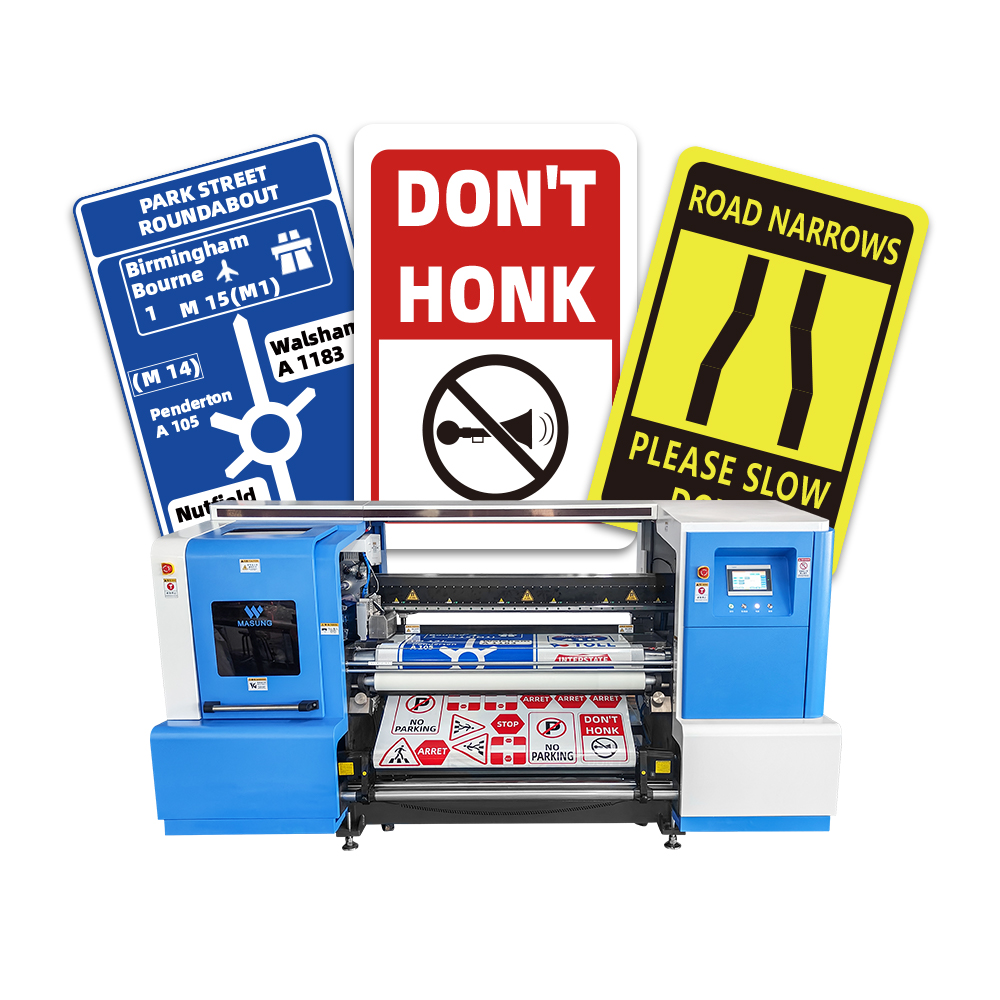
Key features of the reflective traffic sign printer:
High-Performance Industrial Traffic Sign Printing
Fast and Efficient Production
Exceptional Durability for Outdoor Use
Material & Cost Efficiency
Easy and User-Friendly Operation
Professional-Grade Output Quality
Great for:
✔ On-site traffic sign production
✔ Municipal road safety departments
✔ Construction and infrastructure contractors
✔ Signage manufacturers expanding into reflective traffic signs
Orafol UV Traffic Sign Printer
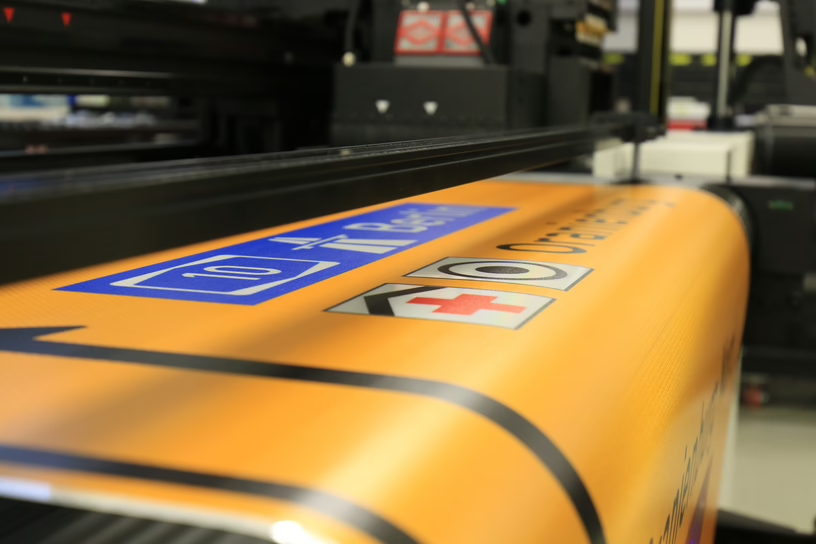
The key features of the industrial traffic sign printer:
High-Quality, Durable Output
Reliable & Efficient Performance
Professional Ink System
Flexible Production Workflow
Optimized Digital Traffic Sign Printing System
Ideal for:
✔ Municipal public works sign manufacturing
✔ Professional sign shops specializing in regulatory signs
✔ Road and highway contractors
✔ Traffic safety and infrastructure departments
Roland DGA TrafficWorks
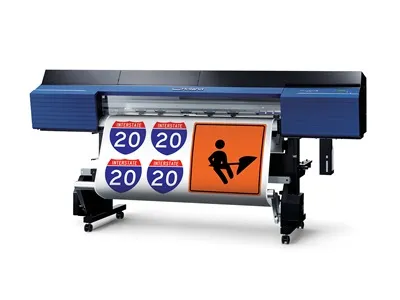
The key features of the industrial traffic sign printer:
Turnkey Traffic Sign Printing Solution
Complete Package Components
High-Quality Color & Reflective Output
Streamlined Workflow & Usability
Business Growth Opportunity
Ideal for:
✔ Print service providers
✔ Sign shops
✔ Graphic businesses
Avery TrafficJet™ Pro
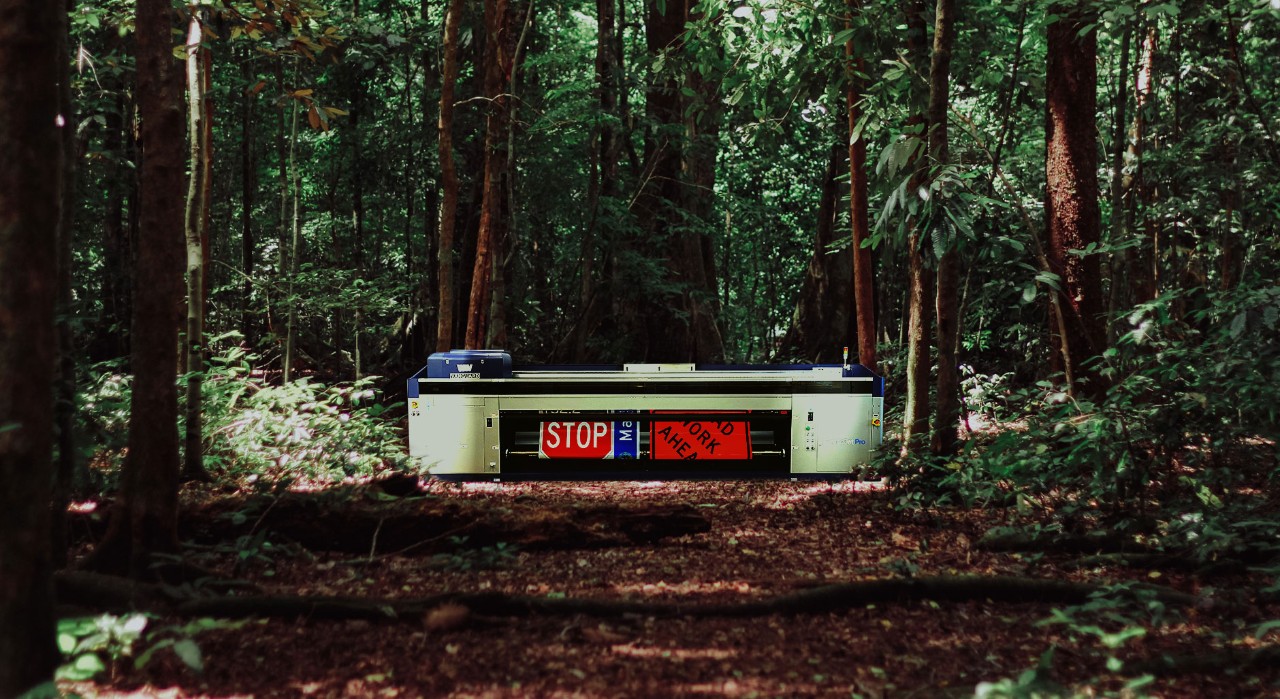
The key features of the digital traffic sign printer:
High-Speed, High-Volume Output
True Traffic Color™ Spot Inks
Efficient Workflow & Material Handling
Integrated Solution with Full Support
Ideal for:
✔ Sign shops transitioning from screen printing to digital
✔ Traffic sign manufacturers needing high throughput
✔ Municipal and government signage production
✔ Fabricators requiring durable, compliant road signage
TrafficJet™ Xpress
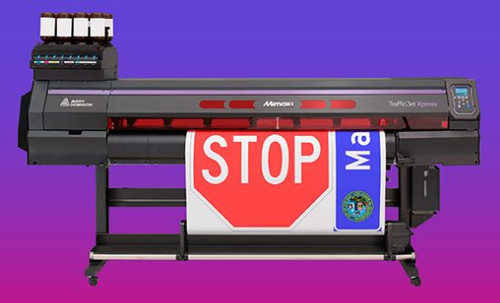
The key features of the digital traffic sign printer:
Easy Operation & Maintenance
Complete Printer System
True Traffic Color™ Spot Inks
Advanced UV-LED Technology
Ideal for:
✔ Sign shops transitioning to digital traffic sign production
✔ Municipal departments needing durable, compliant signage
✔ Custom signage producers
✔ Businesses seeking a compact UV-LED traffic printer