Clothing fabric tags contain essential information such as brand names, garment sizes, fabric composition, and washing instructions. For apparel manufacturers, choosing the right printer for clothing fabric tags is important for maintaining print quality, production efficiency, and compliance with garment labeling requirements.
Unlike ordinary paper labels, fabric tags must often withstand repeated washing, drying, and friction. This makes printing technology, material compatibility, and durability important considerations.
This guide explains how to select a suitable fabric tag printer, compares printing technologies, and highlights key features for garment manufacturers.
What Is a Printer for Clothing Fabric Tags?
A clothing fabric tag printer is a specialized printing device used to print text, symbols, logos, and barcodes onto textile labels.
Common materials include satin, nylon, and polyester, depending on the garment type and durability requirements.
These printers are widely used to produce:
- Care labels: Washing instructions, fabric composition, and care symbols.
- Brand labels: Brand names, logos, and product identification.
- Size labels: Garment sizes and measurements.
- Compliance labels: Fiber content, country of origin, and manufacturer details.
- Tracking labels: Barcodes, serial numbers, and production information.
For clothing manufacturers producing different garment styles, on-demand fabric label printing offers greater flexibility and reduces reliance on pre-printed labels.
Which Printing Technology Is Best for Clothing Fabric Tags?
The two main thermal printing technologies are direct thermal and thermal transfer printing.
Direct Thermal Printing
Direct thermal printers use heat-sensitive media to produce images without ink or ribbons.
They are commonly used for receipts and temporary labels but are generally unsuitable for permanent clothing care labels because printed information may fade or darken when exposed to heat and friction.
Thermal Transfer Printing
Thermal transfer printers use a heated printhead to transfer ink from a ribbon onto compatible textile materials.
With suitable ribbons and fabric substrates, this technology produces durable text, logos, barcodes, and washing symbols.
Thermal transfer fabric label printers are commonly used for satin care labels, nylon washing labels, polyester garment tags, and fabric composition labels.
For washable clothing tags, thermal transfer printing is generally the preferred technology. However, wash resistance depends on ribbon compatibility, textile materials, and printing conditions.
What Features Should You Look for in a Clothing Fabric Tag Printer?
Choosing the right garment label printer requires evaluating several technical factors.
1. Fabric Material Compatibility
Different fabric labels have different surface textures, thicknesses, and heat resistance.
A suitable printer should support the required textile materials, such as satin, nylon, or polyester.
Manufacturers working with multiple fabric types should select equipment that allows adjustments to printing temperature, speed, and ribbon settings.
2. Print Resolution and Clarity
Clothing care labels often contain small text, detailed washing symbols, and extensive fabric information.
A resolution of 300 DPI is suitable for many garment label applications, offering clear text and graphics without significantly compromising printing efficiency.
For particularly small characters or detailed designs, higher resolution may be beneficial.
3. Printing Speed and Production Capacity
High-volume garment factories require consistent printing performance to maintain production efficiency.
While faster printing can improve productivity, manufacturers should balance speed with print quality and ribbon transfer performance.
The optimal printing speed depends on the textile material, ribbon type, and label design.
4. Automatic Cutting and Label Handling
Many fabric tags are printed on continuous rolls of textile tape.
An automatic cutting mechanism helps separate printed labels into consistent lengths and reduces manual work.
Depending on production requirements, manufacturers may need fixed-length cutting, variable-length cutting, continuous printing, or automated label feeding.
5. Software Compatibility and Integration
Garment manufacturers often print different label designs for various clothing brands, sizes, and export markets.
A suitable fabric tag printing machine should support variable data printing, barcode generation, label templates, and integration with production management systems.
For automated production lines, communication interfaces, SDK availability, and firmware customisation may also be important.
How to Choose a Fabric Tag Printer for Different Production Needs Customization?
Different clothing manufacturers have different printing requirements.
| Production Requirement | Recommended Printer Feature |
|---|---|
| Small-batch clothing production | Flexible label formats and easy operation |
| High-volume garment manufacturing | Continuous printing and automatic cutting |
| Washable care labels | Thermal transfer printing with compatible ribbons |
| Detailed washing instructions | 300 DPI or higher resolution |
| Multiple clothing brands | Variable data and label template support |
| Automated garment production | Software integration and customisable interfaces |
| Export clothing manufacturing | Multilingual text and care symbol printing |
Before purchasing a printer for clothing fabric tags, manufacturers should request sample printing on their actual textile materials.
Testing should cover print clarity, ribbon adhesion, cutting performance, and resistance to expected washing conditions.
Common Challenges in Clothing Fabric Tag Printing
Even with suitable printing equipment, garment manufacturers may encounter several challenges.
Poor Wash Resistance: Printed information may fade when the ribbon and fabric material are incompatible. Selecting suitable consumables and conducting washing tests can improve durability.
Unclear Small Text: Low-resolution artwork, unsuitable printing settings, or poor ribbon transfer can affect the readability of washing instructions and care symbols.
Inconsistent Cutting: Fabric labels may shift, curl, or fray during cutting. Testing the cutting mechanism with actual textile materials helps ensure consistent results.
Frequent Label Changes: Factories producing different garments often need to change label designs. Printers supporting variable data and reusable templates can reduce setup time.
Why Choose an OEM/ODM Fabric Tag Printer?
Standard garment label printers may not meet the requirements of every production environment.
For apparel manufacturers and equipment integrators, OEM/ODM customization allows printing equipment to be adapted to specific workflows.
Common customization options include:
- Printing width and mechanical structure
- Fabric feeding and cutting mechanisms
- Communication interfaces and firmware
- Software integration and label formats
- Branding and equipment appearance
For example, an automated garment production line may require a printer that receives label information directly from a manufacturing management system and prints the correct fabric tag for each production batch.
Working directly with a garment tag printer manufacturer can simplify technical communication and equipment development.
Masung Printing Solutions for Clothing Fabric Tags
Founded in 2006, Masung is a Chinese printer manufacturer specializing in thermal printing, thermal transfer printing, and customized printing solutions.
For garment manufacturers and textile label producers, Masung offers thermal transfer printing solutions designed to support various fabric labeling requirements.
With an experienced R&D team, Masung provides OEM/ODM services covering mechanical design, printing configurations, communication interfaces, firmware adaptation, and software integration.
Manufacturers can work directly with Masung’s engineers to evaluate fabric materials, label dimensions, printing capacity, and integration requirements.
For washable clothing labels, sample testing is recommended to confirm ribbon and textile compatibility before mass production.
Frequently Asked Questions
Can a Thermal Printer Print on Clothing Fabric Tags?
Yes. Thermal transfer printers can print on compatible fabric label materials using suitable ribbons. Conventional direct thermal printers are generally unsuitable for permanent washable clothing labels.
What Is the Best Printer for Clothing Care Labels?
A thermal transfer printer designed for textile labels is generally a suitable choice. The ideal model depends on fabric compatibility, printing resolution, production volume, and durability requirements.
Are Thermal Transfer Fabric Labels Washable?
They can be when compatible ribbons and textile materials are used. Manufacturers should conduct washing tests to verify print durability under expected conditions.
Can Fabric Tag Printers Be Integrated into Automated Production Lines?
Yes. Industrial fabric label printers may support automated feeding, cutting, and software communication. OEM/ODM solutions can also be developed for specialised production equipment.
Conclusion
Choosing the right printer for clothing fabric tags requires careful consideration of textile compatibility, printing technology, resolution, cutting accuracy, and production efficiency.
For permanent garment care labels, thermal transfer printing is often a practical solution because it can produce durable information on compatible fabric materials.
By testing sample labels and evaluating production requirements, garment manufacturers can select reliable equipment that supports consistent printing quality and efficient operations.
Looking for a customized clothing fabric tag printer? We have this Masung MS-1740 Ribbon Printer 300 DPI with Auto Cutter for your choice
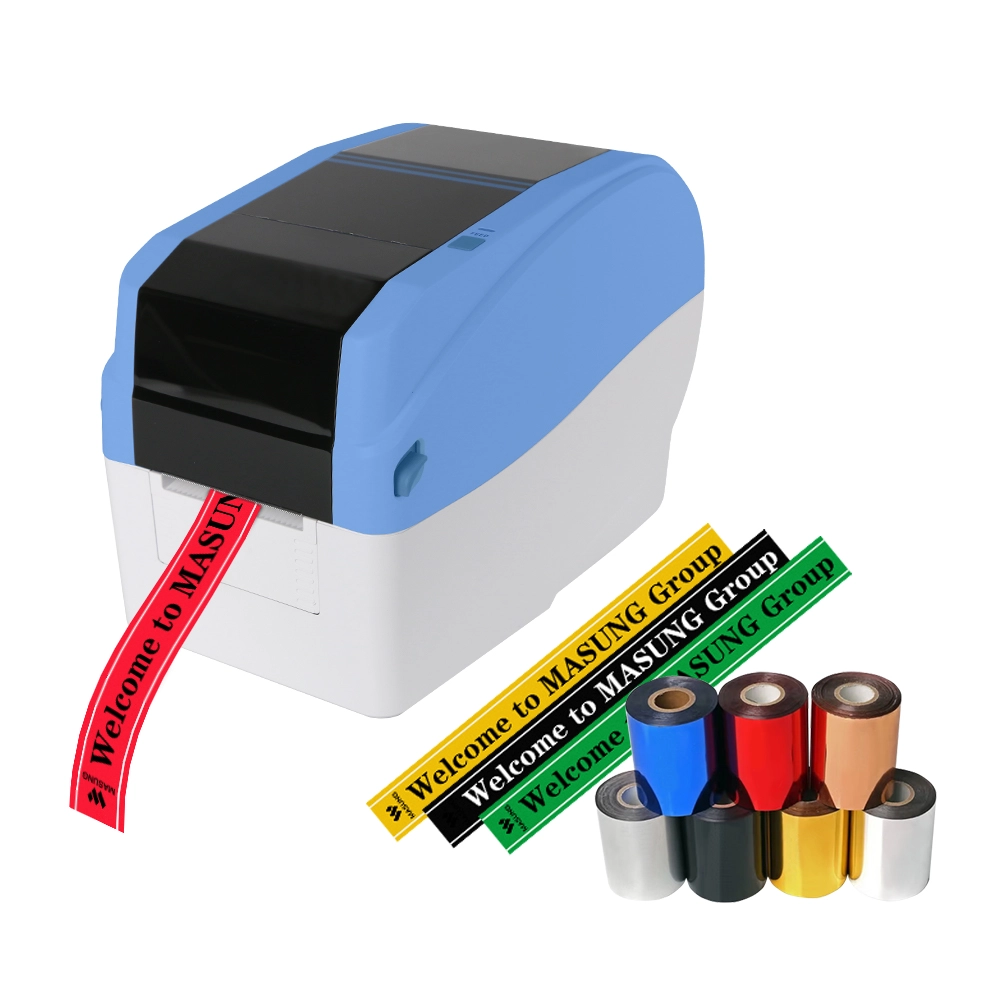
Or contact Masung Group to discuss your fabric materials, label dimensions, and OEM/ODM printing requirements.