A college ID card is more than a simple identification document. It plays an important role in campus security, student management, access control, library services, attendance tracking, and everyday campus activities. As colleges and universities continue to improve their digital infrastructure, having a reliable identification card system has become increasingly important.
However, does every college need to procure its own ID card printer? Is investing in an in-house printing solution worthwhile, or is outsourcing card production a more practical option?
The answer depends on the institution’s student population, card issuance frequency, security requirements, budget, and long-term operational plans. This article explores the advantages, considerations, and potential return on investment of purchasing a college ID card printer. Since most universities have a large number of students, buying an ID card printer is necessary.
1. Why Do Colleges Need Student ID Cards?
Student ID cards serve multiple purposes beyond identifying students. A well-designed campus ID system can integrate several functions into one convenient card.
Common applications include:
- Student identification: Verifying students’ identities during examinations, campus activities, and administrative procedures.
- Campus access control: Allowing authorized students and staff to enter designated buildings, laboratories, dormitories, and other restricted areas.
- Library management: Supporting book borrowing, returns, and access to library facilities.
- Attendance management: Integrating with card readers to record attendance in classrooms, laboratories, and training facilities.
- Cashless payments: Enabling students to pay for meals, printing services, transportation, and other campus purchases.
- Campus services: Providing access to student facilities, sports centers, computer rooms, and other shared resources.
Instead of issuing separate cards for different services, colleges can adopt multifunctional ID cards that combine identification and access technologies.
As a result, an efficient card production system can support both administrative convenience and campus security.
2. When Is It Necessary to Procure a College ID Card Printer?
Not every educational institution needs to own an ID card printer for students. Like I mentioned earlier, smaller colleges with limited student enrollment and infrequent card replacement may find outsourced printing services sufficient.
However, purchasing an in-house printer becomes more attractive under several circumstances.
Frequent Student Enrollment and Card Issuance
Universities with large student populations typically issue hundreds or thousands of identification cards during enrollment periods. They also need to replace lost, damaged, or outdated cards throughout the academic year.
Relying on an external printing provider may result in additional waiting time, transportation costs, and administrative coordination.
With an in-house ID card printer, authorized college staff can produce new cards whenever necessary.
Better Control Over Student Information
Student identification cards often contain personal information, including names, photographs, student numbers, departments, and enrollment details.
Producing cards internally allows colleges to maintain greater control over the card issuance process and limit the transfer of student information to external printing providers.
Institutions should still implement appropriate data protection procedures, access permissions, and secure handling of card templates.
Urgent Replacement Requirements
Students may lose their ID cards or damage them during daily use. If replacement cards take several days to arrive, students could experience difficulties accessing campus facilities or using university services.
An on-site printer allows staff to issue replacement cards quickly, helping minimize disruption to daily campus activities.
Customization and Institutional Branding
Different colleges may require different card designs for students, faculty members, visitors, contractors, and temporary staff.
An in-house printing solution provides greater flexibility to update card layouts, photographs, logos, colors, and other identification details without repeatedly placing orders with external suppliers.
3. What Should Colleges Consider Before Purchasing an ID Card Printer?
Before investing in an ID card printing machine, educational institutions should evaluate several technical and operational factors.
Printing Technology and Quality
Most college ID cards use PVC cards with printed photographs, personal information, institutional logos, and barcodes or QR codes.
Direct-to-card (DTC) printing is a common option for standard PVC identification cards. It prints images and text directly onto the card surface.
For institutions requiring edge-to-edge printing and higher-quality image reproduction, retransfer printing may also be worth considering.
The appropriate technology depends on card design, printing volume, durability requirements, and budget.
Single-Sided or Dual-Sided Printing
A single-sided printer is generally sufficient when the card only needs a photograph, student name, identification number, and university logo.
However, dual-sided printing may be more practical when colleges need additional information on the reverse side, such as emergency contacts, campus rules, barcodes, or access instructions.
Choosing the right configuration helps avoid unnecessary printing costs while leaving enough space for essential information.
Encoding and Integration Capabilities
For campuses planning to introduce multifunctional ID cards, printing quality is only one consideration.
Depending on the campus management system, colleges may require printers with encoding capabilities for:
- Magnetic stripes
- Contact smart cards
- Contactless RFID or NFC cards
Compatibility with existing student information systems, access control platforms, and card management software should also be evaluated before procurement.
Printing Speed and Production Capacity
A college with thousands of newly enrolled students may need to print a large number of cards within a short period.
In this situation, printing speed, input and output capacity, consumables availability, and equipment reliability become important purchasing considerations.
Colleges should estimate their peak card production requirements rather than selecting a printer based only on average daily demand.
4. What Are the Benefits of Owning an In-House College ID Card Printer?
The main advantages of purchasing an ID card printer can be summarized in four areas.
Lower long-term production costs
Although an in-house printer requires an initial investment, colleges that regularly produce and replace student cards may reduce their dependence on external printing services. The actual savings depend on equipment costs, card materials, ribbons, labor, and maintenance.
Faster card issuance
New students, faculty members, and replacement-card applicants can receive their identification cards without waiting for an external supplier to complete an order.
Greater design flexibility
Universities can update card layouts, introduce new identification categories, and customize card information according to changing administrative requirements.
Improved operational control
Keeping the printing process in-house gives authorized personnel greater control over card production, quality checks, and issuance procedures.
5. How to Calculate Whether Purchasing a Printer Is Worthwhile
A practical way to determine whether procurement is necessary is to compare the total cost of outsourcing with the cost of operating an in-house printing system.
Consider the following factors:
| Cost factors | Outsourced printing | In-house printing |
|---|---|---|
| Initial equipment investment | Usually none | Required |
| Per-card production cost | Supplier pricing | Cards, ribbons, and consumables |
| Design flexibility | Depends on supplier | Generally higher |
| Urgent replacement | May involve delays | Can be produced internally |
| Data management | External processing may be involved | Greater internal control |
| Equipment maintenance | Supplier responsibility | College responsibility |
For example, a university issuing 3,000 cards annually should compare the supplier’s per-card quotation against the combined annual operating costs of an in-house system.
The calculation should include the printer’s purchase price, consumables, software, maintenance, and staff time.
If the total in-house cost per card is lower and the operational benefits justify the initial investment, purchasing a collage card printer may be a sensible long-term decision.
6. Choosing the Right ID Card Printing Solution for Colleges
When selecting a supplier, colleges should look beyond the initial equipment price.
A suitable provider should offer reliable printing technology, technical support, compatible consumables, and solutions that can accommodate future campus management requirements.
It is also worth considering whether the printer supports different card sizes, card thicknesses, encoding options, and software integration.
For institutions with specialized requirements, working directly with an experienced student ID card printer manufacturer can provide additional customization opportunities.
Masung, a printer manufacturer specializing in customized printing solutions, provides printing equipment and OEM/ODM development capabilities for different commercial and institutional applications. It has this Masung MS-CH22K Double-Sided ID Card Printer to offer for your consideration.
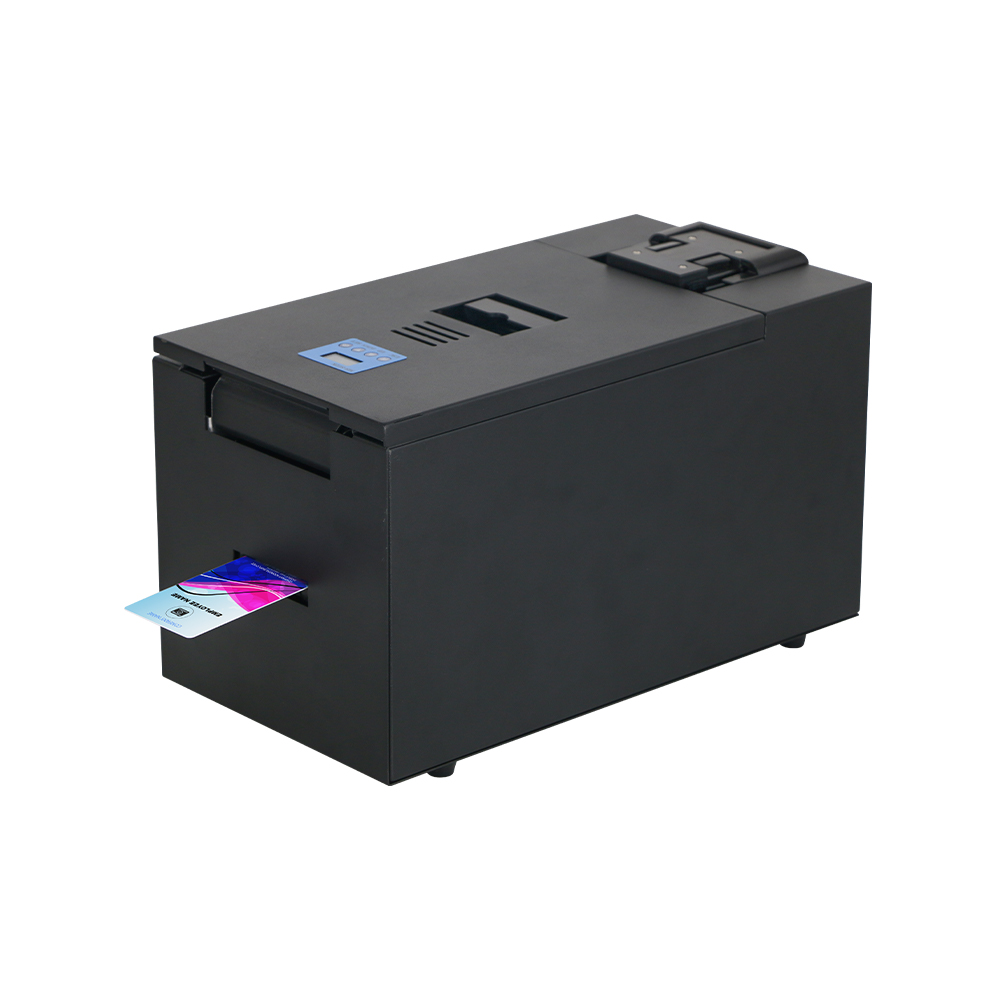
Colleges planning to develop their own student identification systems can discuss their printing volume, card specifications, software requirements, and potential customization needs with the manufacturer before making a purchasing decision.
Conclusion
Is it necessary to procure a college ID card printer?
For institutions with large student populations, frequent enrollment, regular card replacements, and multifunctional campus identification requirements, owning an in-house ID card printer can offer meaningful advantages in efficiency, flexibility, and operational control.
For smaller institutions with limited card production needs, outsourcing may remain a more economical choice.
Ultimately, the right decision should be based on long-term card issuance volume, total production costs, security requirements, and future campus development plans.
Investing in the right printing solution is not simply about producing student identification cards. It is about building a more efficient and manageable campus identification system.