Ribbon printers play a critical role in how businesses create product labels, branding materials, event decorations, and inventory markers across retail, warehousing, and gift industries. Unlike direct thermal printing, ribbon printing machines use thermal transfer technology to produce crisp, long-lasting marks that resist smudging, scratching, and fading, making them essential for applications where label durability matters.
When a ribbon printer fails or produces inconsistent output, workflows slow down. Custom orders get delayed, inventory labeling becomes error-prone, and branded materials may fail to meet quality standards. For operations that depend on daily ribbon printing, investing in a durable, reliable commercial ribbon printer reduces downtime, supports high-volume production, and maintains consistent print quality across every job.
What Makes a Ribbon Printer Durable and High-Performing?
The durability and performance of commercial ribbon printers depend on both mechanical construction and core component quality. A machine built for regular commercial use must handle continuous printing, various media types, and the environmental conditions of its working space.
Key factors that define a dependable ribbon printing machine include:
Printhead resolution and lifespan. The printhead is the heart of any thermal transfer printer. High-resolution heads (such as 300 DPI) deliver sharp text, clean barcodes, and precise logos, while long-life printhead designs maintain consistent quality over thousands of printing hours and reduce replacement frequency.
Cutter durability and precision. In high-volume settings, cutters activate hundreds or thousands of times per day. A robust, well-engineered cutter produces clean, even cuts without ribbon residue, minimizes jams, and extends the overall service life of the machine.
Thermal transfer ribbon compatibility. Quality ribbon printers work reliably with mixed-base and wax-resin ribbons across different colors. Consistent heat transfer ensures even ink deposition, so labels remain legible and professional even under varying temperature and humidity conditions.
Housing and environmental tolerance. Commercial spaces such as warehouses, kitchens, or workshop floors expose equipment to dust, humidity, and temperature swings. Printers rated for broad operating temperature and humidity ranges deliver more consistent performance and suffer fewer environmental failures.
Stable connectivity options. Reliable USB, Bluetooth, and Wi-Fi connections prevent missed print jobs and keep production moving. Wireless capability is especially valuable for mobile workstations, retail counters, and multi-device office or warehouse networks.
Maintenance-friendly design. Printers with simple media loading, tool-free component access, and clear cleaning instructions reduce preventable downtime. Employees can perform routine upkeep without specialized training, keeping the ribbon printer in service longer.
Choosing the Right Ribbon Printing Machine for Your Operation
Selecting a commercial ribbon printer starts with matching the machine to your workspace, print volume, and media requirements. The best ribbon printers for your business should support the label sizes and materials you use while fitting naturally into your daily workflow.
When evaluating ribbon printers for commercial environments, consider the following:
Print Resolution and Output Quality
For product labels, branding, barcodes, and fine text, 300 DPI resolution is the commercial standard. Higher resolution ensures scannable barcodes, crisp logos, and professional-looking custom ribbons for gifts, events, and packaging.
Print Speed for High-Volume Workflows
Busy retail counters, shipping stations, and production lines require fast, continuous printing. Measured in inches per second (ips) or millimeters per second, print speed determines how quickly you can complete batch jobs and keep pace with peak demand.
Media Width and Material Versatility
Different applications call for different label sizes and materials. Adjustable paper width support lets you print everything from small asset tags and clothing tags to wider shipping labels and decorative ribbons. The most versatile ribbon printing machines work with satin, cloth, paper tags, and synthetic label materials from a single device.
Connectivity Flexibility
Modern commercial operations rely on mixed wired and wireless setups. USB connections suit fixed workstations, while Bluetooth and Wi-Fi enable mobile printing from phones, tablets, and networked systems. Broad connectivity also simplifies integration with existing POS, inventory, and ERP software.
Form Factor and Portability
Counter space is often limited in retail, florist shops, and event settings. Compact, lightweight models fit easily on crowded workbenches or mobile carts, while larger desktop units are better suited for dedicated warehouse or production stations.
Dual-Printing Capability
Some advanced ribbon printers support both direct thermal and thermal transfer modes. This dual-purpose design lets businesses print standard self-adhesive labels and premium ribbon-based labels with one device, reducing hardware costs and simplifying equipment management.
Why Quality Ribbon Printers Matter Across Industries
Ribbon printing is not limited to a single sector. From retail shelf labels to wedding decorations, reliable ribbon printers support efficiency, compliance, and brand presentation in many fields.
In retail and apparel, ribbon printers produce price tags, brand labels, size markers, and barcode labels that must remain legible through handling, shipping, and store display. Thermal transfer output resists fading from light and contact, keeping products looking professional longer.
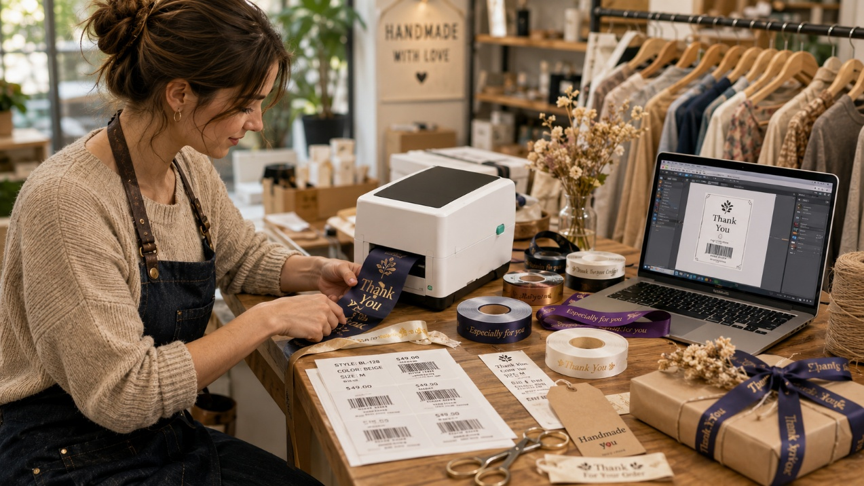
In gift, floral, and event industries, custom satin ribbons add branded, personalized touches to bouquets, gift boxes, wedding favors, and holiday packaging. A high-quality ribbon printer produces sharp, vibrant text and designs that elevate presentation and support on-demand customization.
Over time, choosing durable ribbon printers also lowers total cost of ownership. Fewer repairs, less frequent component replacement, and longer equipment lifespan all reduce long-term expenses while minimizing costly workflow interruptions.
Explore Masung Ribbon Printer Solutions
Choosing the right ribbon printer means balancing print quality, speed, media versatility, and reliability against your specific operational needs. Masung offers a range of thermal transfer ribbon printers built for commercial environments, from compact customizable models to high-speed dual-mode workhorses.
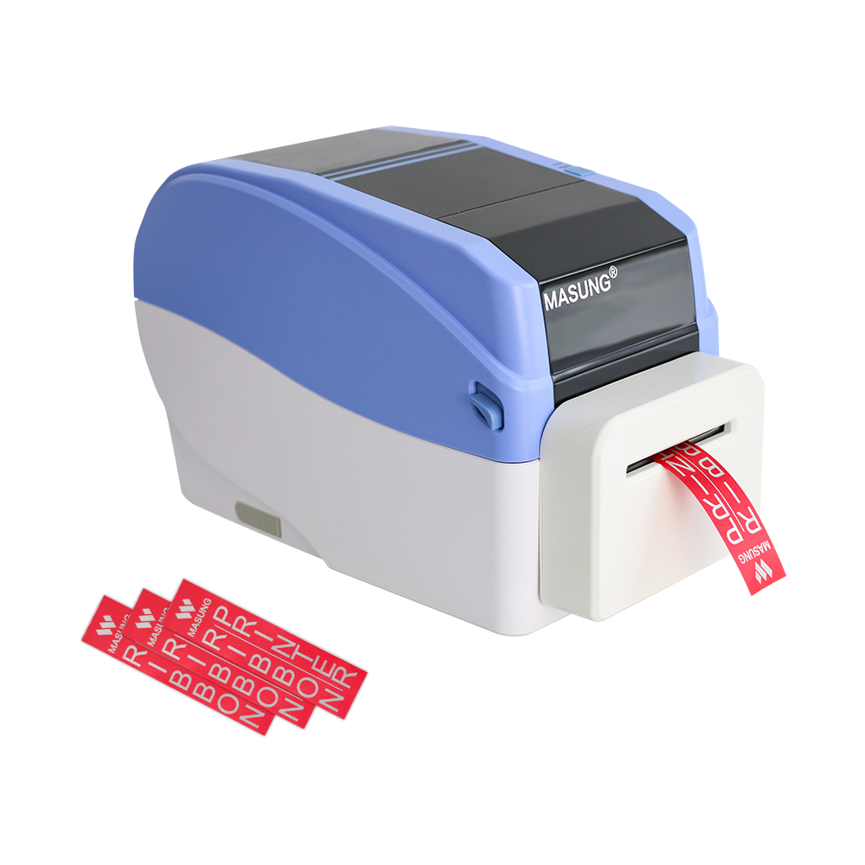
For businesses focused on on-demand customization and portability, the Masung MS-1740C customizable ribbon printing machine delivers 300 DPI resolution in a lightweight 1.65 kg body. It supports satin, cloth, paper, and synthetic label materials from 15mm to 60mm wide, and offers USB, Bluetooth, and Wi-Fi connectivity for flexible printing from workstations or mobile devices. With a 6 ips print speed and manual feed adjustment for precise placement, it excels at gift wrapping, floral decoration, event accessories, and small-batch retail labeling.
For higher-volume operations needing broader media support, the Masung MS-1730 thermal transfer ribbon label printer provides dual thermal and thermal transfer printing at speeds up to 152mm/s. It handles media widths from 20mm to 104mm and supports multiple programming languages for seamless warehouse and retail system integration. With 300 DPI output, multi-sensor detection, and quick-cover design for easy media changes, it is well suited for retail inventory workflows.
Both models are engineered for consistent performance across typical commercial temperature and humidity ranges, with durable cutters and reliable thermal transfer technology that reduces maintenance and extends service life.
Frequently Asked Questions About Ribbon Printers
What are the main advantages of a ribbon printer over direct thermal?
Ribbon printers use thermal transfer technology, which produces labels that are more resistant to smudging, scratching, moisture, and fading. This makes them better for long-term use, outdoor exposure, and applications where label durability is critical.
What materials can a ribbon printing machine print on?
Most commercial ribbon printers work with satin ribbons, cloth labels, paper tags, coated paper, and synthetic label materials. Exact compatibility depends on the model and its media width adjustment range.
How do I choose between portable and desktop ribbon printers?
Portable models suit mobile work, event use, and small retail counters where space is limited. Desktop ribbon printers typically offer wider media support, faster speeds, and higher duty cycles for dedicated high-volume stations.
Can ribbon printers produce multiple colors?
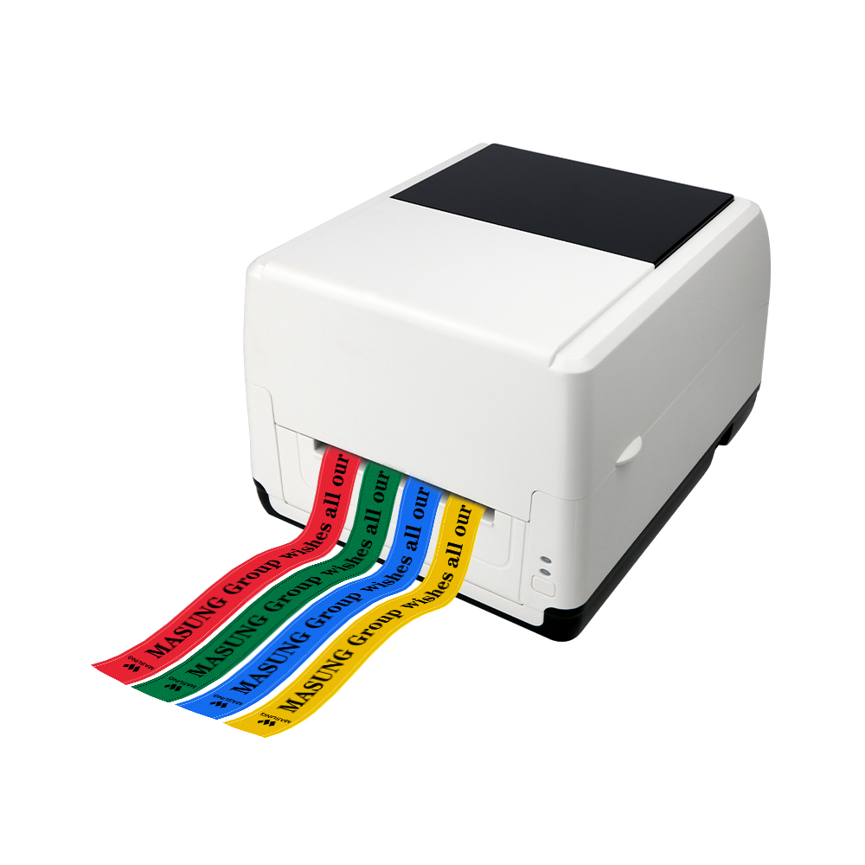
Yes. By switching carbon ribbons of different colors, users can print labels and decorative ribbons in various hues for color-coded inventory, branding, and seasonal decoration.
How does maintenance affect ribbon printer lifespan?
Regular cleaning of the printhead and cutter, proper ribbon loading, and using compatible media prevent adhesive buildup, jams, and premature wear. Printers designed for easy, tool-free maintenance make routine upkeep faster and more consistent.
Are dual-mode ribbon printers worth the investment?
Dual-mode printers that support both direct thermal and thermal transfer printing let businesses handle standard shipping labels and premium durable labels with one device. This can reduce hardware costs and simplify equipment management across departments.