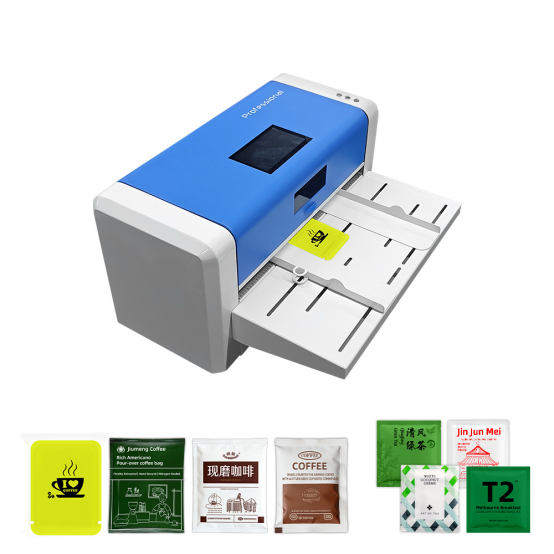
Why Stand-Up Pouches Need Flexible Printing Solutions
The food packaging industry is moving toward personalized, small-batch, and artisanal production. From local coffee roasters and tea brands to snack producers and specialty food businesses, more companies are using stand-up pouches because they combine convenient packaging with strong shelf appeal.
However, many small and medium-sized food businesses still rely on pre-printed pouches or outsourced packaging production. This can limit flexibility, increase lead times, and make small-volume customization more expensive.
For businesses that frequently launch new flavors, seasonal products, limited editions, or customized packaging, an on-demand stand up pouch printer provides a more flexible alternative. Instead of ordering large quantities of pre-printed pouches, businesses can print variable information, branding elements, and designs as needed.
A dedicated stand up pouch printing machine can be particularly useful for coffee, tea, snacks, pet treats, specialty foods, and other products packaged in flexible pouches. It allows businesses to respond to changing designs and production requirements without relying entirely on external printing suppliers.
For small-scale producers, the ability to print directly onto packaging can also help reduce excess inventory. Businesses can produce packaging closer to actual demand instead of storing large quantities of pouches with outdated designs.
Why Use a Thermal Transfer Printer for Stand-Up Pouches?
When choosing a printer for stand up pouches, it is important to consider the characteristics of flexible packaging materials. Stand-up pouches may be made from laminated films, kraft paper, foil, PE, PET, or other synthetic materials, depending on the product and packaging requirements.
Thermal transfer printing uses a ribbon and controlled heat to transfer ink onto the printing surface. This makes the technology suitable for applications where printed information needs to remain legible during handling, transportation, and storage.
Key advantages of thermal transfer printing include:
- Durable printing: Suitable for applications exposed to moisture, grease, handling, or temperature changes.
- Material flexibility: Can be used with various coated papers, films, laminated materials, and synthetic substrates.
- Variable data printing: Suitable for batch numbers, QR codes, expiration dates, product information, and traceability codes.
- Small-batch production: Allows businesses to print according to actual demand without relying on long production runs.
- Reduced setup requirements: Digital printing eliminates the need for traditional printing plates for many short-run applications.
For a coffee roaster, for example, a printing machine for stand up pouches can be used to produce packaging for different coffee varieties, roast levels, seasonal products, or limited editions without requiring a completely new outsourced printing order for every variation.
What Can a Stand Up Pouch Printer Print?
A modern stand up pouch printer can support more than basic product branding. Depending on the machine configuration, businesses can use it for a combination of fixed and variable information.
Brand and Product Information
Businesses can print logos, product names, brand elements, product descriptions, and other packaging graphics directly onto suitable pouch materials.
Batch and Production Information
Variable printing makes it possible to add batch numbers, production information, lot codes, and other data that changes from one production run to another.
QR Codes and Traceability
QR codes can be used for product information, traceability, marketing campaigns, recipes, loyalty programs, or links to digital content. Printing these codes on demand makes it easier to create different codes for different products or batches.
Seasonal and Limited-Edition Designs
A business may need only a few hundred pouches for a holiday product, promotional campaign, or limited-edition flavor. An on-demand stand up pouch printer can provide greater flexibility for these shorter runs than conventional large-volume packaging production.
Common Mistakes When Buying a Stand Up Pouch Printing Machine
Even after deciding to bring pouch printing in-house, businesses can make several purchasing mistakes. Evaluating the machine according to the actual packaging workflow is more important than simply comparing the purchase price.
1. Choosing Based Only on the Purchase Price
A low-cost printer may appear attractive initially, but the total cost of ownership also includes printheads, ribbons, maintenance, software, replacement parts, and technical support.
Before purchasing a stand up pouch printing machine, consider the expected printing volume and the long-term availability of consumables and replacement components.
2. Ignoring Material Compatibility
Not every printer and ribbon combination works equally well with every pouch material.
Stand up pouches may use kraft paper, laminated paper, plastic films, foil structures, PE, PET, or combinations of these materials. Before buying a printer for stand up pouches, test the actual pouch material you intend to use.
The appropriate ribbon and print settings can have a significant effect on adhesion, readability, and durability.
3. Buying a Printer That Cannot Handle Your Pouch Format
Pouch sizes vary considerably between coffee, tea, snacks, pet treats, and other food products.
Check the machine’s supported print width, printable area, media handling method, and whether it can accommodate the pouch format used by your business.
If your products include multiple pouch sizes, a more adaptable printing machine for stand up pouches can reduce the need for separate equipment.
4. Overlooking Consumable Costs
The cost of ribbons and other consumables can become significant over time. When comparing machines, calculate the expected cost per printed pouch rather than focusing only on the initial equipment price.
It is also worth checking whether the machine supports commonly available consumables or requires proprietary supplies.
5. Underestimating Ease of Operation
A printer that requires complicated calibration or specialized technical knowledge can become difficult to operate in a small production environment.
For coffee shops, small food manufacturers, specialty food brands, and packaging workshops, intuitive controls and straightforward media replacement can make daily operation much easier.
How to Choose the Right Printer for Stand-Up Pouches
Choosing the right printer for stand up pouches involves evaluating several practical factors.
1. Printing Technology stand-up
First, determine what type of printing technology matches your pouch material and application.
Thermal transfer is particularly suitable when the application requires durable text, codes, and graphics on flexible technology stand-uppackaging materials. It can be useful for applications where resistance to handling, moisture, grease, or other environmental conditions is important.
2. Material Compatibility
Confirm that the stand-up pouch printer is compatible with the actual materials you use.
Potential materials include:
- Kraft paper
- Laminated paper
- Plastic films
- PE
- PET
- Foil-based packaging
- Synthetic packaging materials
Testing actual production materials before purchase is preferable to relying solely on a general material compatibility list.
3. Print Width
Print width is another important consideration.
Coffee bags, tea pouches, snack packaging, and pet-food pouches can have significantly different dimensions. Make sure the stand up pouch printing machine can cover the required printing area without limiting your future product range.
For businesses serving multiple packaging formats, adjustable printing widths can provide additional flexibility.
4. Variable Data Capability
If you need to print different information on each pouch, make sure the system can handle variable data.
Useful applications include:
- Batch numbers
- Lot codes
- Expiration dates
- QR codes
- Product numbers
- Traceability information
- Promotional information
This capability can make an in-house stand up pouch printer useful beyond simple logo printing.
5. Printing Speed
Printing speed should match your actual production volume.
A small coffee roaster may have very different requirements from a contract food manufacturer. Rather than choosing the highest possible speed, consider how many pouches you actually need to print per day and whether the printer can maintain consistent output during peak periods.
6. Software and Connectivity
Consider how the printer will fit into your existing workflow.
USB connectivity, computer-based operation, intuitive software, and straightforward design-file management can make it easier for operators to change product information and printing layouts.
For businesses producing many SKUs, convenient design changes can be particularly valuable.
7. Maintenance and After-Sales Support
Maintenance requirements should also be included in the purchasing decision.
Check how easily operators can access printheads and consumables, how frequently routine maintenance is required, and whether the manufacturer provides technical support, documentation, training, and replacement parts.
Which Businesses Can Benefit From a Stand Up Pouch Printer?
A stand up pouch printer can support a variety of food and consumer-product businesses.
Coffee Roasters
Coffee companies often need different packaging for roast levels, origins, flavors, seasonal products, and limited releases. On-demand printing can make short production runs easier to manage.
Tea Brands
Tea businesses may need packaging for different blends, flavors, sizes, and seasonal collections. A flexible printing system can reduce dependence on large quantities of pre-printed packaging.
Snack Manufacturers
Snack businesses can use pouch printing for different flavors, promotional campaigns, seasonal products, and small product launches.
Specialty Food Producers
Small-batch producers of nuts, dried fruit, spices, confectionery, and other specialty foods can use a printing machine for stand up pouches to support frequent packaging changes and smaller production quantities.
Pet Treat Businesses
Pet treat brands can use flexible pouch printing for different product varieties, flavors, sizes, and promotional campaigns.
For these businesses, the primary benefit is not simply printing speed. It is the ability to adapt packaging production to changing product and market requirements.
Where to Buy a Stand Up Pouch Printing Machine?
Direct From the Manufacturer
Buying directly from a stand-up pouch printer manufacturer can be worth considering when you need specific configurations, customization, technical integration, or larger quantities.
Direct communication with the manufacturer can also make it easier to discuss printing materials, print widths, software requirements, and OEM or ODM options before purchasing.
B2B Platforms
B2B marketplaces offer access to a wide range of printing equipment and suppliers. However, buyers should carefully evaluate manufacturer credentials, product specifications, certifications, factory capabilities, warranty terms, and after-sales support.
A supplier’s ability to provide material testing and technical documentation can be particularly important when purchasing a stand up pouch printing machine.
Industry Trade Shows
Packaging and printing trade shows can provide an opportunity to see equipment operating with real packaging materials. Buyers can compare machines, discuss applications with manufacturers, and test print quality before making a purchasing decision.
For businesses unfamiliar with pouch printing technology, seeing a printer for stand up pouches operate on their own packaging material can be especially useful.
Why Consider the Masung CH572 for Stand Up Pouch Printing?
For small and medium-sized food businesses looking to bring flexible packaging printing in-house, the Masung CH572 is designed for applications involving custom packaging printing.
The machine uses thermal transfer printing, features an intuitive touchscreen, supports adjustable printing widths up to 10 inches, and uses a durable aluminum housing. These characteristics make it suitable for applications involving coffee bags, tea pouches, snack packaging, and other flexible food packaging formats.
For businesses producing multiple SKUs or smaller packaging batches, the CH572 can provide an alternative to ordering every pouch design as a large pre-printed batch. Instead, businesses can produce packaging information according to their actual production requirements.
Conclusion
For small and medium-sized food businesses, packaging flexibility is becoming increasingly important. Instead of relying exclusively on large quantities of pre-printed packaging, brands can use a stand up pouch printer to support smaller batches, product variations, seasonal designs, and variable information.
When choosing a stand up pouch printing machine, consider more than the initial purchase price. Material compatibility, printing technology, print width, variable-data capabilities, operating costs, ease of use, maintenance, and technical support all influence the long-term value of the equipment.
A suitable printer for stand up pouches can help coffee roasters, tea brands, snack producers, specialty food companies, and other businesses make packaging production more responsive to actual demand.
For businesses looking for an adaptable printing machine for stand up pouches, the key is to match the machine’s capabilities with the materials, pouch formats, printing volume, and customization requirements of the application.
Masung has the CH572 stand-up pouch printer to offer for your consideration.